Light Surface
Fragmented inputs become one controlled system
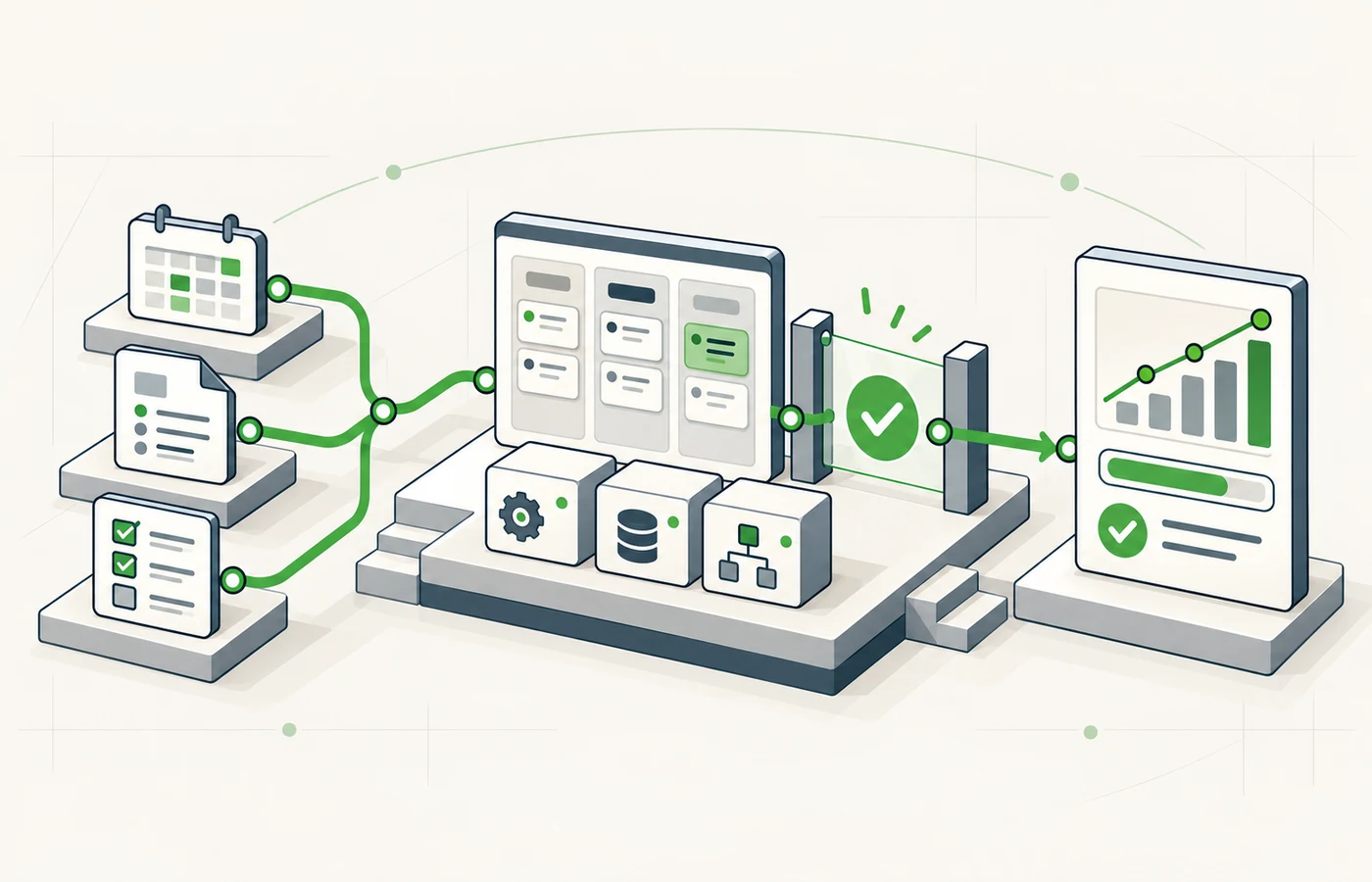
Use recognizable work artifacts, one coherent platform, and a visible outcome. Green carries the operating flow.

Tech Ops PH
How To Use The Brand
Operational rules for applying the system without creating drift
Operating Pattern
The brand system is meant to speed up real work, not create another layer of indecision. Use this page to decide which branded surface to reach for, which rules matter most, and when to escalate from a direct-use export to an editable template or a new cataloged default.
Selection Rules
Move from need, to approved asset, to template, to new default. Skip unnecessary invention.
Pick the actual surface first: website copy, social banner, deck, document, proposal, card, or print item.
If a production-ready PNG, PDF, or DOCX already exists, use that before opening a template.
When personalization is required, start from the registered HTML, DOCX, PPTX, or source file.
If a new variation will be reused, add it to the catalog, approved deliverables, and changelog in the same pass.
Channel Map
Use this map when the question is “where should this live?” rather than “what does the rule say?”
| Need | Default family | What to prioritize |
|---|---|---|
| Profile headers and personal/company presence | Social and campaign surfaces | Short promise, crop safety, immediate recognizability. |
| Client-facing narrative and capabilities | Deck and document system | Operational clarity, proof structure, restrained hierarchy. |
| Contact exchange, networking, handoff | Contact and print surfaces | Fast capture, low friction, print-safe execution. |
| Logo use, avatars, favicons, app icons | Identity and platform assets | Correct file variant, spacing, compact readability. |
| Public website or company-facing branded surface | Public brand surfaces | Service architecture, proof categories, market-facing naming. |
Visual Language
The approved middle ground: more spatial and expressive than flat line art, calmer and more credible than full 3D.
Light Surface
Use recognizable work artifacts, one coherent platform, and a visible outcome. Green carries the operating flow.
Dark Surface
Use the same shallow camera, restrained depth, and short contact shadows when the scene sits on Ink.
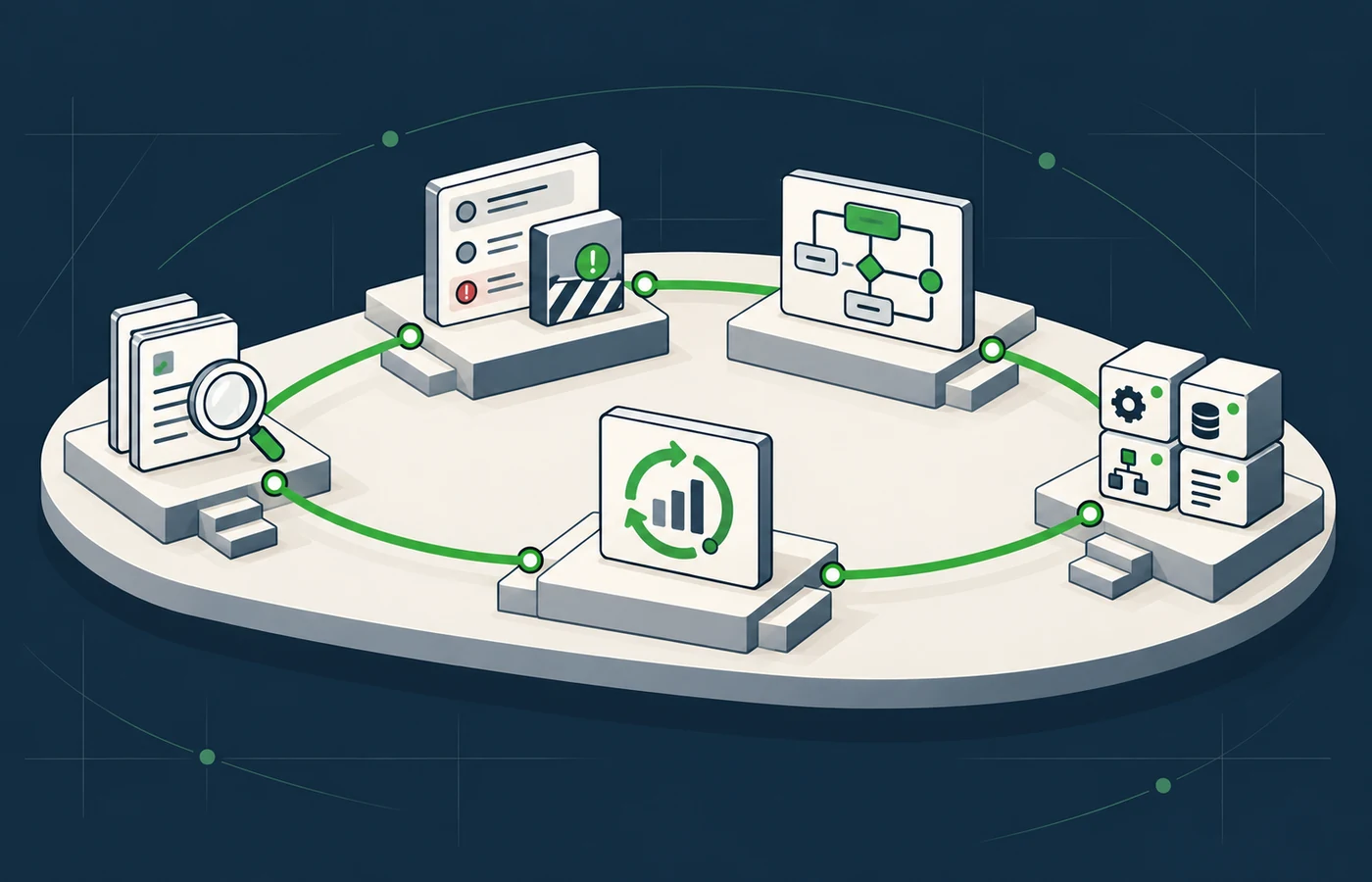
Use forms, calendars, approvals, workflows, modules, dashboards, and evidence—not generic tech symbols.
Use a shallow axonometric viewpoint with consistent platforms, outlines, side faces, and lighting.
Make one green path explain the movement from friction or input to control and visible result.
Use flat front planes, slightly darker sides, and only short low-opacity contact shadows.
Approved animated grids, orbit lines, and background images may remain behind the 2.5D foreground. Keep movement slow and low-contrast; the operational scene should stay stable and readable, including when reduced motion is enabled.
Rules That Matter
Every application should still reflect the same brand logic. The channel changes; the underlying system does not.
Tech Ops PH consistently.Detail Pages
These pages group the production system into browsable operational slices.